Showing posts with label development. Show all posts

Friday, December 6, 2013

NaNoWriMo: It's Over. Now What?

National Novel Writing Month has come and gone. So, all you NaNo-ers, how did it go? Did you meet your goals? Honestly, I fell short at the end there. I thought NaNo would be so easy, with my very attainable 2,000-words-a-day goal! But it ended up being much harder than I expected. When I went to bed on November 30th, I had a dream that I wrote my brains out and found myself miraculously at 52,000 words! I felt so accomplished . . . until I woke up. But there's no need to feel bad if you didn't finish. Whether you wrote 50,000 or 2,000 words, you should feel great! You finally got going on your novel. Now you either need to start revising or, like me, finish writing the rest of it.

What's Next?

Yes, NaNo is over, but your writing isn't confined to one autumn month a year. And your book still has a ways to go, regardless of how many words you were able to type. So what is the next step in the process?

Make a Goal and Keep Writing

If you weren't able to finish your novel, never fear! Now's the time to set a new goal. Perhaps you didn't hit the fifty thousand you were shooting for. Can you get there by the end of the year? Can you get there by mid January? Maybe you did hit the 50K, but the story isn't over. Can you estimate how much is left to be written? If you can't, that's okay. Instead of making a word-count goal, make a goal for how much time you'll spend writing during the week. It could be a daily goal of three hours or a weekly goal of five. Whatever your goal is, try to make it attainable as well as useful. A weekly goal of one hour isn't going to be that helpful, but it is better than not writing anything at all.

photo credit here


Revise, Revise, Revise

If you were able to finish your novel, that's great! I suggest taking a day or two to relax and let the text just sit. The next step in publishing your novel is not to send it off to a publisher right away (as editor Lisa Mangum mentioned in our recent interview). You've been writing as much and as quickly as possible, so there are bound to be a few typos, errors, plot-holes, or even missing scenes. Now is the time to go back through your novel and figure out where the problems are. First, save a new copy of your manuscript. Title it something like, "Book Revision 1." That way, if you delete an entire chapter one day during revisions and then decide you want it back on another day, you still have an original file with everything you once wrote.

After you've saved your previous work, you are ready to start revising. One way to do this is to just read the story. Fix any typos you come across immediately. For bigger things you want to change or fix, highlight the text, bold it, and insert a query to yourself. You may even want to make a master list of all the changes you want to make. If you are inspired to include a new scene or chapter, add that to the list. Once you've gotten through the entirety of the manuscript, go through your master list and begin making the changes. Go through the manuscript a couple of times in this fashion, making notes to yourself and adding or subtracting different elements. It may also help to read the text aloud.

Once you feel like your revisions are where you want them to be, take your manuscript to a reader. This can be your writing buddy, your writing group, or even your sister-in-law who loves to read. Ask them to make comments and suggestions as they read. Their comments can be invaluable in the revision process. You may be too close to the manuscript to see errors like, "Wait, I thought Carly had brown hair," or "Is there a word missing here? The sentence is confusing." So the fresh eyes of your reader(s) can help find these problems.

Revisions can take some time, so try not to get frustrated. If you do, take a break from the manuscript and let it sit for a day or two. But remember, you're almost ready to submit your manuscript for publication, so don't give up!

photo credit here


Until Next NaNo . . .

I still have quite a ways to go with my NaNo novel, but it was such a blast to give the whole "write a book in a month" thing a shot. I hope all of you had as much fun as I did! Feel free to return to these NaNo posts if you ever find yourself stuck in a writing rut. And hey, if you're missing NaNo, here's one last suggestion that my writing buddy, Katherine, and I came up with: Make your own mini NaNoWriMo. Call it My Novel Writing Week (MyNoWriWee? MyNo for short!), and make a word goal. Can you write 10K this MyNo? Or maybe *gulp* 25K? You can do it!

Have a great year. Keep writing—don't stop—and I'll see you next November when we take on NaNoWriMo all over again!

Farewell, fellow NaNo-ers!
Holly
Current Word Count: (sigh) 32,685

Friday, November 29, 2013

NaNo Day 29: Write-A-Thons

It's the end of NaNoWriMo! Are you putting the last few thousand words together this weekend and making it to that beautiful 50,000? I hope so! And hopefully I'll be right there with you. But if you feel like you are crazy behind in your word count (like I happen to be, yet again), then you can do what I did last week and have a write-a-thon.

Write-A-Thons

A write-a-thon is just like those read-a-thons you had in fourth grade. You can load up on healthy snacks, grab a comfy pillow, and spend the day writing away. Last week, I was very behind in my writing. We're talking about ten thousand-ish words behind. I called my writing buddy (you all remember Katherine, right?), and she popped over for a few solid hours of writing. We wrote and wrote and blasted past those difficult blocks. Then, sadly, she had to go home. But did I sulk in the corner and watch Netflix for the rest of the night? NO! I kept writing. And writing. And writing! And the next day, guess what I did? I wrote some more! And by the end of that day, I was completely caught up in my word count and feeling great about life.

Of course, things happen. And you, like me, may find yourself off the high of being on track and back to thousands of words behind (think 17,500). If you're losing hope, you can join me tomorrow, Saturday, for a NaNo write-a-thon! You'll be writing with thousands of others because, well, it's Saturday, and it also happens to be the last day of NaNo. So if you really want to finish, you may have to spend some solid hours at the keyboard, pounding out all the words you need. Just don't give up. That's the key. Start early, take some breaks, don't give up, and try not to fall asleep!

photo credit here
You can make it! This is coming from a girl who is seriously far behind. But I can do it too! Use all of the tips you can think of and just finish that manuscript. Maybe by the end of the day tomorrow, we'll be NaNo winners after all.

Good luck!
Holly
Current Word Count: 32,685

Tuesday, November 19, 2013

Interview with a Publisher

We're taking a break from our NaNo posts to think about the future of those NaNo manuscripts. Have you ever wanted to get the inside scoop on how to get your manuscript noticed? Recently, we were privileged to interview author, editor, publishing veteran, and Disney enthusiast Lisa Mangum about her publishing insights. Read our interview with her below.

What do you look for in a cover letter that pushes you to read the manuscript attached?
I like a cover letter that is well-written and professional. The best cover letters have a solid hook for the manuscript that is specific and engaging and that touches on the four main elements of the story: the protagonist, the main goal, the main obstacle, and the consequence of failure. (For example: Frodo must journey to Mount Doom, battling an army of evil creatures, in order to destroy the Ring of Power, or else all of Middle Earth will fall into shadow.)

What kind of information do you like to see in the short author bio?
When it comes to author bios, tell me the important details about yourself that relate to writing. I’m interested in if you’ve been published before, if you belong to any writer’s groups or attend any writer’s conferences, or if you have won any awards or honors for your work. For first-time writers, that can be tricky since you may not have a long writing resume to share. In that case, less is more; use the space you would have used on your bio to tell me more about your book.

In the first page or so, what are the first clues or triggers in a manuscript that make you know you won’t read more? And which elements do you recognize that make you want to read more?
The first page is so important when it comes to reviewing a manuscript, and yet the main job of the first page is to make me want to read page two. I think it’s important to present a problem on that very first page—it doesn’t have to be a big problem, but if there is something amiss right out of the gate, I’m more likely to continue reading. It’s also great if you can show your hero doing something heroic in the first couple of pages. Again, it doesn’t have to be him saving the world, but a small act of kindness, or a clever quip to showcase his sense of humor, or a moment of bravery can go a long way in establishing a character and making me want to read more about him. I’ll often stop reading early in a manuscript if there are too many grammatical or spelling errors, if the writing voice is flat, if the characters are two-dimensional, if there is too much info-dumping or unnecessary description.

How can authors get their manuscript to the top of the slush pile? How can they set their book apart from other submissions?
Easy—write the best book ever written. :) Seriously, though, often I’ll pay special attention to manuscripts that come in from authors who are active in the writing community, who have attended writer’s conferences, or who have clearly paid attention to the submission guidelines and who have done their homework. Your submission is essentially your job application. You want a publisher to hire you to write stories, and your submission is proof that you would be a good investment. You wouldn’t apply for a job with a company that you didn’t know anything about, so don’t submit your manuscript without doing some homework about the company beforehand.

What are some vital things you feel a manuscript needs before you’ll consider publishing it?
I love to find a great story told with a fresh voice and built on a solid foundation of excellent writing.

What advice would you give NaNoWriMo writers who want to submit their work for publication?
Wait! NaNo is a wonderful way to get words down on paper, but any time you write that many words that quickly, you’ll want to make sure you go back through it and revise it and polish it before you submit it. So enjoy NaNo. Write all the words you have. And then wait a few months to let it settle, then spend a few more months editing and revising. Wait another month just to be sure. Then submit it. It’ll be a better book when you do.

What's the most important thing a writer can do with their manuscript before submitting it?
I don’t know if this is the most important thing, but one thing I like to do is read the manuscript out loud. That will help slow you down and see what is actually on the page and not what you think is on the page. It will help you catch typos, missing words, and spots where the writing is awkward or uneven. And if you are brave enough to read it out loud to someone else, you’ll be able to gauge if you’ve hit the emotional notes you were aiming for. Did they laugh in the right places? Cry? Beg you to read just one more chapter? If not, then you know where to go back for another look at revisions.

Do you like it when authors attach photos of themselves?
Author photos are unnecessary at the submission stage. I’m sure you look very nice, but I’m way more interested in what you’ve written and the kind of story you can tell than in how you look.

Can you tell us a bit about the manuscript acceptance and rejection processes and about how long it usually takes to hear back?
At Deseret Book/Shadow Mountain, the process is essentially the same. An author may submit his or her work online at submissions.deseretbook.com or submissions.shadowmountain.com. Then it undergoes our review process, in which we look at every single submission that comes in and evaluate the overall idea and the strength of the writing. We look at our current publishing plans and see what kinds of manuscripts we need (or which genres are oversaturated). Manuscripts that show promise are passed around the review committee for additional feedback. When we find one we would like to publish, we contact the author and begin the next phase of the process: contracts and scheduling. If, unfortunately, we decide to pass on a manuscript, we email the author with that decision as well. Our review process takes anywhere between eight to twelve weeks.

What steps should authors take upon receiving a rejection, if any?
Rejection hurts, no doubt about it, so I think it’s okay to feel sad when you receive a rejection letter from a publisher—but only for a short time. After that, you need to move forward and submit your work elsewhere. There are a lot of publishers out there, and a lot of options for authors, and the best way to turn a rejection letter into an acceptance letter is to continue to practice your craft, improve your skills, submit your work, and never let a rejection be the end of your career.

~

The editors at Castle Editorial know how much you want your manuscript to shine before you submit it to publishers. We want to help you get your submission noticed by any acquisitions editor as well as help free your manuscript from those tangles that prevent a publisher from picking your book. Those subtle issues, as Lisa mentioned, include "too many grammatical or spelling errors, if the writing voice is flat, if the characters are two-dimensional, if there is too much info-dumping or unnecessary description." When we get a chance to point those elements out to you with our guaranteed two sets of experienced eyes, we help your polished manuscript rise to the top! If you have any questions, leave a comment below. We can't wait to read your work!

Many thanks to Lisa for all of her great tips and information! Her wisdom and experience never cease to amaze.


Lisa Mangum has worked in the publishing department of Deseret Book since 1997 and is currently the Acquisitions Editor and Product Development Assistant. She specializes in editing fiction for the Shadow Mountain imprint and has worked with several New York Times best-selling authors, including Ally Condie, James Dashner, and Jason F. Wright. While fiction is her first love, she also has experience working with nonfiction projects (memoir, educational, cookbooks, etc.) and some children’s picture books.

She loves finding that “diamond in the rough” in the slush pile, and she is particularly skilled in the developmental editing part of the process. Lisa is also the author of four national best-selling YA novels (
The Hourglass Door trilogy and After Hello). She graduated with honors from the University of Utah and currently lives in Taylorsville, Utah, with her husband, Tracy.

Friday, November 15, 2013

NaNo Day 15: Writing Buddies

Hello fellow NaNo writers! Another Friday is upon us, and guess what? It's day 15! You know what that means? The month is halfway over. Can you believe it? Do you have 25,000 words? I know I don't. Man, this whole NaNo thing is way harder than I thought!

Anyway, remember my last post when I talked about eating an elephant? About writing 500 words and then doing something else (like laundry)? Well, let me just say, that toooootally saved my word count that day! And I've never done so much laundry in my life!

The problem was that I did that for a total of one day. And here I am, back to thousands of words behind schedule. A few days ago, I was really upset about my lack of words. Yes, upset enough that I cried (though I blame that slightly on the pregnancy hormones). After my dear husband comforted me and then went off to work, I did the only thing I could think of to help me get over this block: I sent a whiny text to my writing buddy.

Writing Buddy

Well, she's more like my writing coach. Her name's Katherine, and she's one of my fellow Castle Editorial editors, and she is one of the best developmental editors I know. She was there while I wrote my manuscript over the summer, and she helped get me through the rough patches of that project. She does three very important things for me and my writing:

1. She reads as I write.

Basically, after I write a few thousand words, I throw them all up on a Google doc for her to read when she has time. And she reads them soon after they're posted.

2. She asks me for more.

Whenever I haven't posted chunks of manuscript for a few days, she asks me to send her more. If I tell her that I haven't written more, she asks me to write more for her. How can you say no to someone who asks you to write more because they want to read it?

3. She never talks about the bad stuff.

She is constantly making comments about how great the story is. She'll say things like, "I love this character!" or "That description makes me so hungry," or even "This is so intense! Ahh!!" She rarely, if ever, says things like, "Your dialog seems incredibly forced," or "The setting needs some serious work." Of course, those types of comments are valid and helpful. But during a first draft, they are more inhibiting than beneficial. So instead, she says all the nice, happy things to keep me writing.

Once the manuscript is finished and we start going through revisions, that's when she pulls out the red pen and starts going after the flaws. The point is that we both know there are flaws (it's a first draft, people!), so why focus on them when there is still story to be written?

If you are feeling like you just can't do it, if you think you have the NaNo blues, then find yourself a writing buddy. Your significant other, your mom, your crazy uncle in Jamaica, anybody who you trust and who cares about you. If they push you in a positive way, then you can lean on them during the rough patches. That's what I did! And after her pep talk, I wrote over 4,000 words! So it works. I'm telling you, it does.

photo credit here


Happy NaNo!
Holly
Current Word Count: 21,178

Friday, November 8, 2013

NaNo Day 8: Losing Steam?

It's day eight of National Novel Writing Month! Are you losing steam? Well, grab some fruit snacks and a mug of cocoa and just keep on keepin' on.

Okay, so I should probably take my own advice. At the beginning of NaNo, I was totally rockin' it. My word counts were thousands of words above my goal for each day! I was feeling so accomplished. The words were flowing, the outline was moving me along perfectly, and the writing wasn't laborious.

But then life happened.

For some people, this could be having to work overtime or needing to study for a midterm or even, hopefully not, dealing with some kind of tragedy. All of these things can throw you off and make you forget that NaNo is even happening. And who could blame you? But then, there are also positive things happening in life that can distract you: a family member coming to visit for the weekend, an awesome party thrown by your roommate, or, in my case, a happy doctor's appointment followed by hours of shopping for little pink onesies. When life happens, NaNo can really just slip your mind.

And so here I am. Fifteen hundred words behind my goal word count. With dishes piled in the sink, laundry taking over the bedroom, and who-knows-what molding in the fridge. And I have no idea how to prioritize any of it. Is anybody else in this boat? I have an inkling that I'm not alone. . . .

When I was younger and would get overwhelmed with school and things, my dad would say to me, "How do you eat an elephant?" And I would sigh and mumble, "One bite at a time." I can eat today's elephant! And so can you. So here's the one-bite-at-a-time plan: 500 words. That's it! I'll write 500 words then put in a load of laundry. I'll write 500 more words then start the dishes. You probably have different tasks you need to worry about. But you can divide them with 500 words. We can do it! I mean, what's 500 words? Just a little bite of the elephant.

Good luck!
Holly
Current Word Count: 10,537

photo credit here


Thursday, October 31, 2013

Happy Hallow--WAIT, NANO IS TOMORROW!!

Hey, everybody! It's Holly again. Holly stands on tiptoe and waves to the vast audience. Remember me? First, Happy Halloween! Don't forget to hoard your kids' candy tonight (I don't have kids, so I'll just turn off all the lights in my house and pretend I don't hear the doorbell. The Jolly Rancher Chews are MINE!), because you just may need it in the coming weeks.

I love Halloween. The decorations, the candy, the pumpkin-flavored everything. Yep. This is my kind of party. But in a few hours . . . the world of witches and warlocks and goblins and ghouls becomes . . . NANO! Lightning flashes in the windows and cackling catches on the wind. Don't worry, don't worry. It's all going to be okay. Don't believe me? That's okay. Let me help you convince yourself.

Outline Time

Go on, open a word processor, grab a notepad, or steal some note cards from a nearby backpack. It's time to get down to business. Of course, as you know, we can't actually write anything for a few hours. But we can get our thoughts in order. There are a bunch of ways to outline, but I'll just tell you the two ways that worked for me.

Timeline Note Cards

With my summer manuscript, I used 3x5 note cards. I wrote titles of scenes on them and put them in order. I also drew maps of locations like a house, a school, or even a bedroom. I made lists of characters that went together. I wrote "Flashback" on a few and filled them in with background info. On some of the cards, I used specific colors of ink, so that I knew what was going on. The stack of cards was my lifeline (and I almost lost it a few times). But if chapters spilled onto the page in the wrong order, that was okay with me. I just made sure to move the cards around so I didn't forget the important stuff. Scenes got lumped together, and scenes got stretched out. But overall, the note cards stayed the same. You may like this style of outlining if you like to have something physical to connect you to your manuscript. You can hold the scenes in your hands, stare at them, scribble on them, whatever you want. If that sounds appealing, you should try the note card outlining method.

photo credit here

List of Thoughts

This is the kind of outline I used for my NaNo manuscript. I pulled up my word processor, and I made a bulleted list. But, well, things kind of got out of hand. At first, the list was practical. Something like,
  • Lisa lives in Florida.
  • Lisa's mom is sick.
  • Lisa's dad is in jail.
  • Lisa gets a letter from her dad talking about how he's getting out in a few months.
Practical, right? By the end of my outline, things became more like this:
  • Lisa dives into the ocean, mere moments before the gunfire erupts behind her. She knows that Derrick will stop at nothing to capture her, so she swims with all her might. But the waves are crashing and the salt stings her eyes. Her arms flail, and soon, she's choking water into her lungs and sinking into the ocean. Suddenly, she feels fingers wrapping around her wrists! She tries to kick away, but the person holding her is much too strong. She can't open her eyes to that salt again, but she knows that she has to escape somehow. Before she has a chance to worry about drowning (or maybe she is worried about drowning), the fingers turn into arms around the trunk of her body, lifting her to the surface of the water. She coughs water out of her lungs and breathes in the sea air. Too exhausted to fight, she leans back against her rescuer and feels her hair get caught on his stubbly chin like velcro.
Yes, that was one bullet point. And that is how my outline became 6,000 words. Yeah. Just like that. Anyway, it worked for me. That bullet point, though it teeters on the edge of writing, will bring me back into the story and remind me of where I want things to go. You may like this outlining strategy if you are really worried about forgetting stuff (that's why I liked it). This strategy also helps if you desperately want to get started with your manuscript, but the clock has not quite struck midnight yet. The degree of description will help satiate your craving to write ahead of time.

photo credit here

Hopefully these two outlining strategies will help you as you fret during the remaining hours of October. But really, don't fret, just write (after midnight, of course). It will all work out. And if you ever feel stuck, just keep writing anyway. But now's not the time to talk about getting stuck. I'm sure all of that will come later.

Happy NaNo! (Oh, and Happy Halloween!)
Holly

Tuesday, October 29, 2013

Gearing up for NaNoWriMo

Hey, all you writers out there! In just a few short days, Halloween will come to an end . . . and National Novel Writing Month (also known as "November") will begin! Are you ready? Are you inspired? Are you freaking out because you don't yet have an idea? Well, never fear! We here at Castle Editorial will be with you every step of the way.

CE has four editors, and I am just one of them. Perhaps it is time to introduce myself. I'm Holly. Hello! Yes, I'm an editor. So why do I care about NaNo? Well, I'm also a writer. Okay, I don't quite feel like I can call myself a writer just yet. I've never been published. (Unless you count that haiku from third grade.) I've actually never submitted a manuscript for publication either. But have I written a full-length manuscript? YES! Just this past summer, actually. Anyway, I like to write. And I would like to be published some day. And NaNo is one way to force yourself into writing a lot and build the habit of writing all the time.

This is my very first time doing NaNo, so I'll be posting a lot about my experience. Hopefully the things I learn along the way will help you in your venture. And hey! Maybe by the end of all this, we'll all have pretty decent manuscripts to send off to agents, publishers, or our dear friends at Castle Editorial.

Good luck this month! Just 50,000 words to go!
Holly

Photo Credit

Friday, June 14, 2013

ABDs of Plot, Part 2

Read part 1

Climax

The climax is "the most intense, exciting, or important point of something; a culmination or apex." Let's use The Lord of the Rings. There they stand, Frodo and Sam, at the most important point in their journey to destroy the one ring, and Frodo manifests a change of heart. In comes Gollum, a character representing a culmination of years of servitude and devotion to the ring, and a scuffle over the ring ensues.
    Sam got up. He was dazed, and blood streaming from his head dripped in his eyes. He groped forward, and then he saw a strange and terrible thing. Gollum on the edge of the abyss was fighting like a mad thing with an unseen foe. To and fro he swayed, now so near the brink that almost he tumbled in, now dragging back, falling to the ground, rising, and falling again. And all the while he hissed but spoke no words. 
    The fires below awoke in anger, the red light blazed, and all the cavern was filled with a great glare and heat. Suddenly Sam saw Gollum’s long hands draw upwards to his mouth; his white fangs gleamed, and then snapped as they bit. Frodo gave a cry, and there he was, fallen upon his knees at the chasm’s edge. But Gollum, dancing like a mad thing, held aloft the ring, a finger still thrust within its circle. It shone now as if verily it was wrought of living fire. 
    "Precious, precious, precious!" Gollum cried. "My Precious! O my Precious!" And with that, even as his eyes were lifted up to gloat on his prize, he stepped too far, toppled, wavered for a moment on the brink, and then with a shriek he fell. Out of the depths came his last wail Precious, and he was gone. 
The Lord of the Rings: The Return of the King, J. R. R. Tolkien
Did you notice the ABDs in play? The scene is clearly set and the action is quick and fluid; the story's background elements are merging in a pinnacle moment of development: the principal characters are finally brought into the critical situation; and the climatic struggle between betrayal and loyalty risks to thwart the characters' ultimate goal!

Apply this excellent example of the ABDs pattern to your own characters as you build the climax of your story. Because of unique backgrounds, each of your characters has separate longing and desires that drive their choices and actions throughout the tale. Thus your story develops, building up clashes of desire as well as conflicts preventing the fulfillment of desire, until finally something or someone is forced to choose, to struggle against a foe, to face the truth—at the risk of losing something very dear, possibly even their own life.


All roads lead to the climax, so the details you include should supply readers enough to chart out maps of strategy and build tension bridges all the way to the point of no return. Think of the climax as the thing(s) that your reader will never get back once your characters summit that paramount crisis.

Ending

Well, as they say, what goes up must come down. After the climax, comes the denouement. After the fable, Aesop states the moral. The end wraps up the overarching element that brought all the characters together. We may plot Lord of the Rings as a story about a ring that needs to be destroyed, but the concluding lines after the climactic scene reveal a deeper plot: a story about loyalty and enduring friendship.
    "Your poor hand!" he said. "And I have nothing to bind it with, or comfort it. I would have spared him a whole hand of mine rather. But he’s gone now beyond recall, gone for ever." 
    "Yes," said Frodo. "But do you remember Gandalf’s words: Even Gollum may have something yet to do? But for him, Sam, I could not have destroyed the Ring. The Quest would have been in vain, even at the bitter end. So let us forgive him! For the Quest is achieved, and now all is over. I am glad you are here with me. Here at the end of all things, Sam." 
The Lord of the Rings: The Return of the King, J. R. R. Tolkien
One purpose of a story's ending is to extract a moral or offer a broader conclusion. It may summarize or philosophize, leave the reader stunned or in happy tears, but what it must not do is stop the plot before it's finished. Throughout the entire story, the elements intersect and merge to propel us through the twists and turns and over the obstacles and around the bends. If those elements all intertwined are not somehow collectively or individually tied off, your credibility and likability as an author will promptly unravel.

Take the time to map out what you want each character to have learned or lost, gained or forfeited by the plot's end. The plot is largely completed at the climax because the driving components of the story have crashed head on. The denouement allows for the dust to clear and settle, accounts for damage and casualties, and offers a glimpse into the future of the survivors. Sometimes an epilogue can close the story, sometimes the promise of a sequel will take care of larger loose ends.


Whatever comes after the climax needs to fit the development and mood and tone of the preceding scenes and interaction between characters. But in the end, the story must end. And at some point in your background development, you must know to what end you're writing. If you don't know (and some of us are discovery writers who find the ending the closer we get to it), keep writing—don't surrender the story to a premature ending! Revisit and reapply the ABDs to every chapter until the ending reveals itself to you. Your characters will give up their secrets, the setting will settle at last, the dialogue will have the last word—and you'll have a bestseller.

And there you have it—a great start to laying your story down, letter by letter. Now you know the ABDs, next time won't you write with these!

Monday, June 10, 2013

The ABDs of Plot

Yes, usually it's the ABCs of something, but if you tend toward the slightly dyslexic (like I sometimes do) you won't find the following list out of sorts. While mnemonically muddled, it still includes the first five letters of the alphabet, so it's easy enough to remember.

Action
Background
Development
Climax
Ending

Boom, your story's movin'.

Writers will often have a general idea of where their novels will start and end, but it's the road from beginning to end that provides the composition "adventure." The middle ground is riddled with alignment-destroying plot-holes and block after block of blocks, which is, ironically, the precise kind of rocky adventure we wish would permeate our paragraphs when our stories are making no progress.

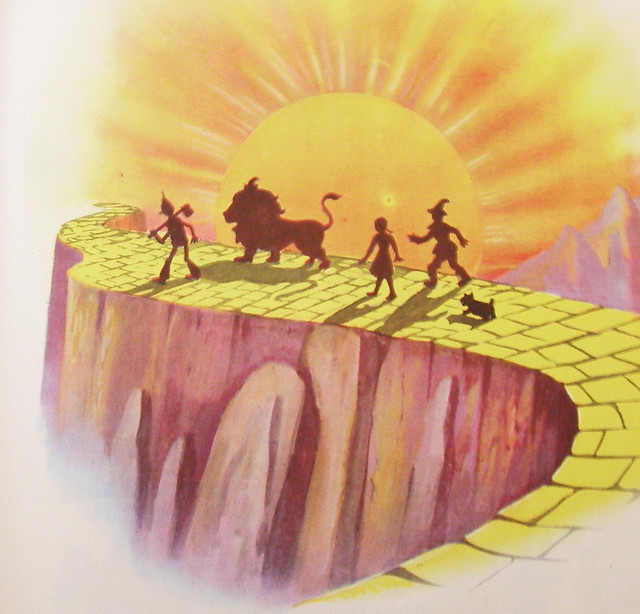
When you're struggling to get from one end of your story to the other, remember the ABD building blocks. Stories are a matrix made up of many layers of beginnings and ends: scenes (which are ideally shaped out of action), background, and development. Chapter after chapter you'll find yourself repeating the same arcs as you build each scene in your story because that's what stories do. The road is paved one yellow brick at a time.


This post will be published in two segments: first the action, background, and development, then the climax and ending. Both are aimed toward helping you get the middles of your story paved so smoothly that readers will be baffled you ever battled writer's block at all.